
Rental IQ keeps the cap count, the lease file and the required-document packet current — and answers the three questions that stall a resale: how many units are rented, whether this owner is actually grandfathered, and where the signed lease and addendums are. Rollups sync back into your management platform, so nobody learns a second daily tool.
An attorney, a lender or a buyer’s agent asks a simple question, and finding the answer means opening a spreadsheet somebody stopped updating in March.
The count lives in a spreadsheet, the leases live in a folder, and the two disagree. By the time anyone reconciles them the association is already over its cap.
Somebody ticked a box years ago. Nobody remembers why, and nobody cleared it when the unit sold — so the cap quietly drifts upward for years.
The lease was emailed to a manager who has since left. The pet addendum was never returned. The first anyone hears of it is at closing.
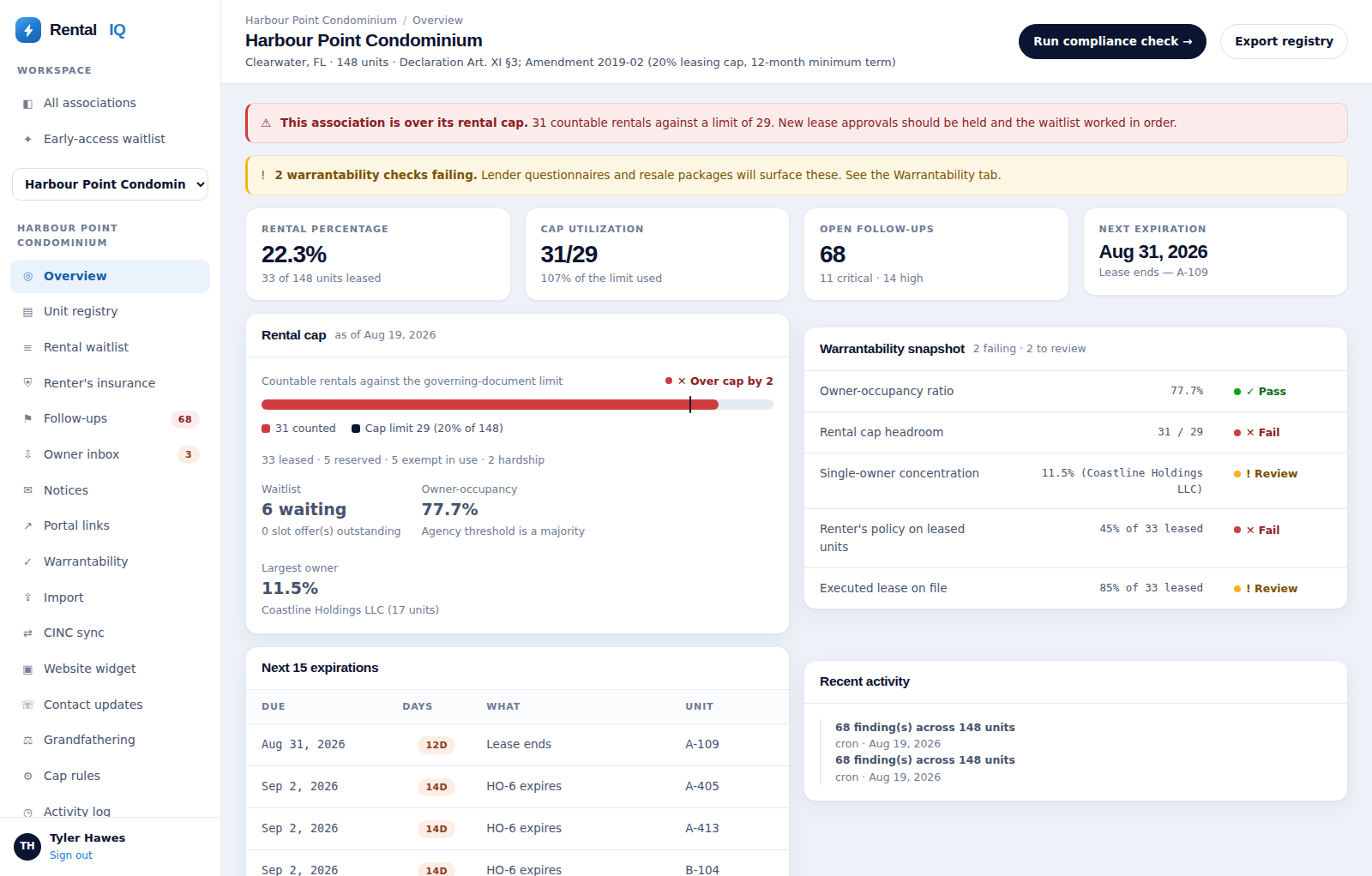
A live counter against the governing-document limit, percentage or hard count, with the rounding your declaration actually uses. When the community is at cap, the waiting list orders itself and slot offers expire on their own.
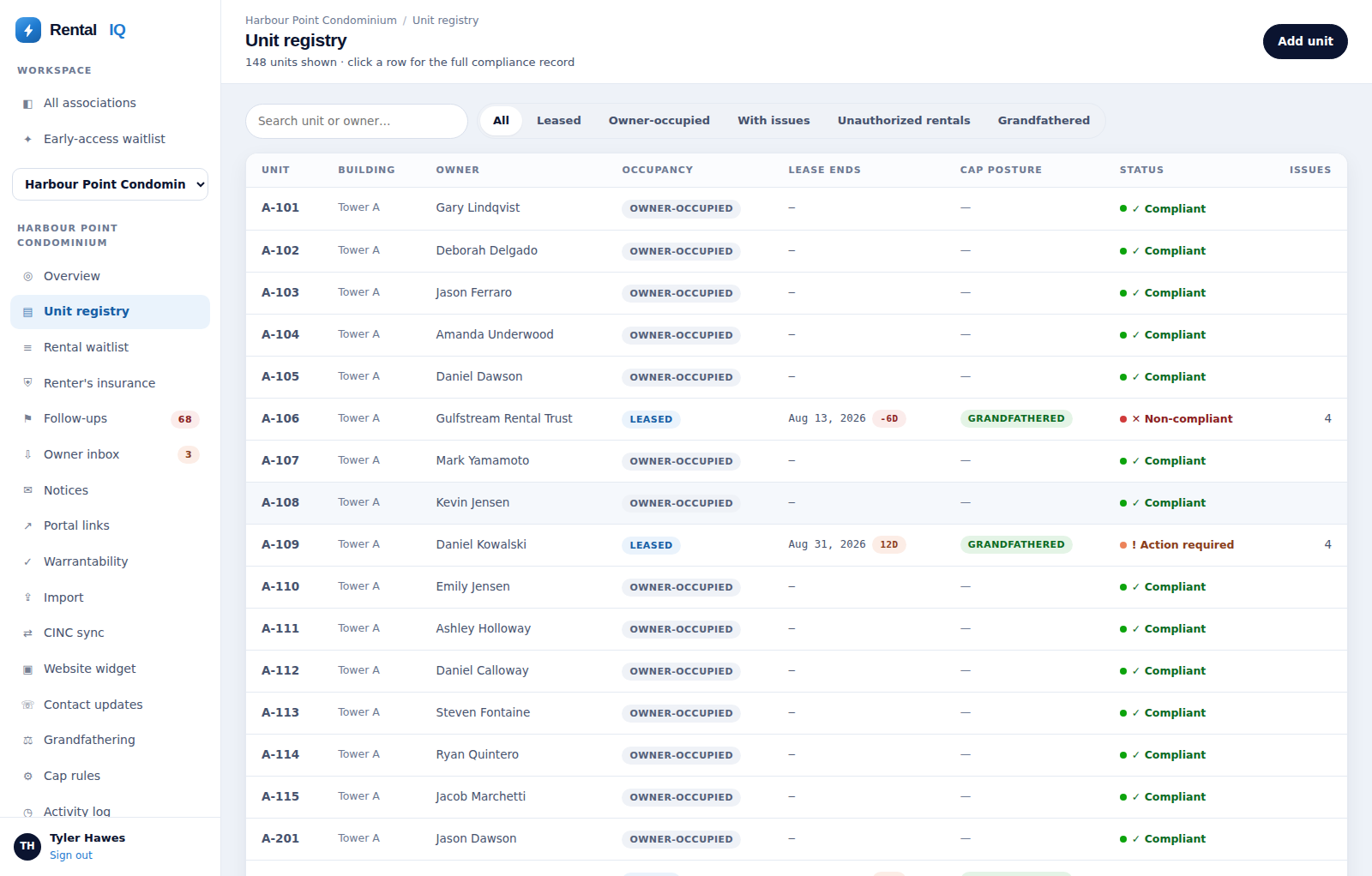
Every lease with its versioned addendums and the forms a community requires — pet, vehicle, rules acknowledgment. Owners upload a PDF and the fields come back filled in for a manager to confirm.
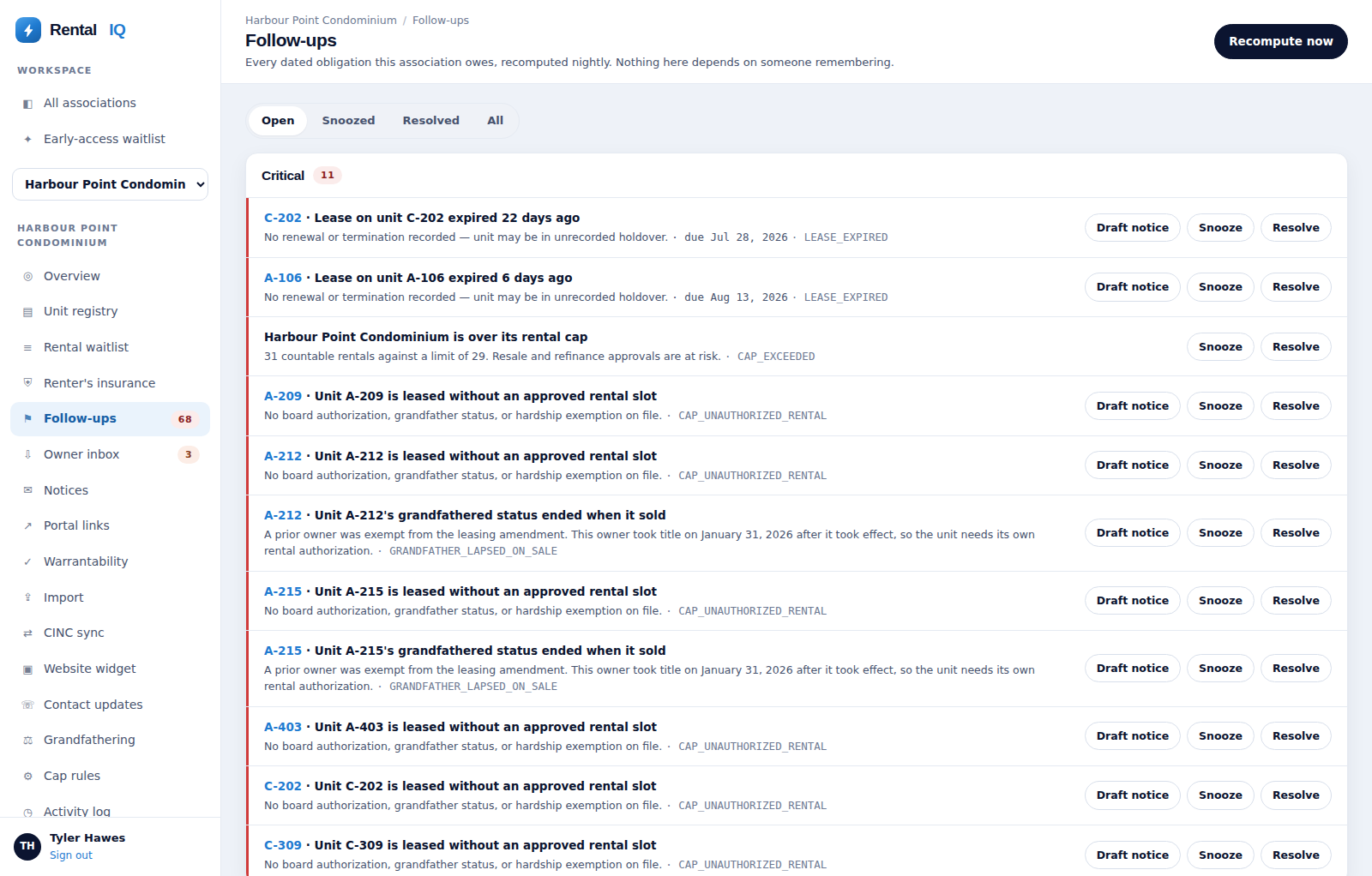
Roughly thirty rules recomputed nightly. Findings keep their assignee across runs and resolve themselves when the underlying problem clears. No alert configuration, because the alerts nobody configured are the ones that never fire.
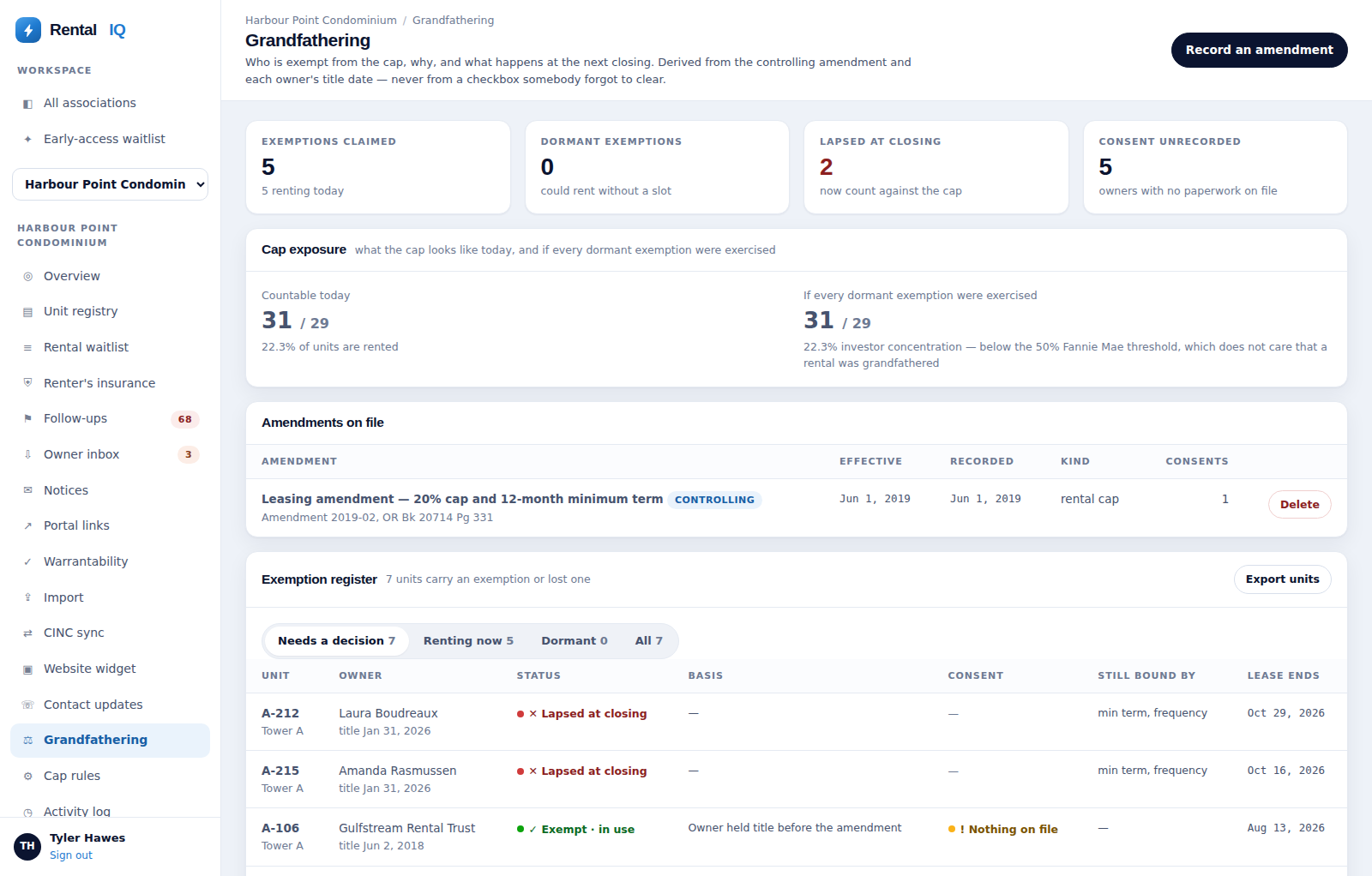
In most states a leasing amendment binds owners who consented to it plus everyone who took title afterwards — Fla. Stat. §718.110(13) for condominiums, §720.306(1)(h) for HOAs. The exemption belongs to the person, and it dies at the closing table.
Rental IQ derives it instead of trusting a checkbox: the controlling amendment’s effective date against each owner’s title date, with per-owner consent records that remove an exemption and a lapse that fires automatically when an exempt owner sells.
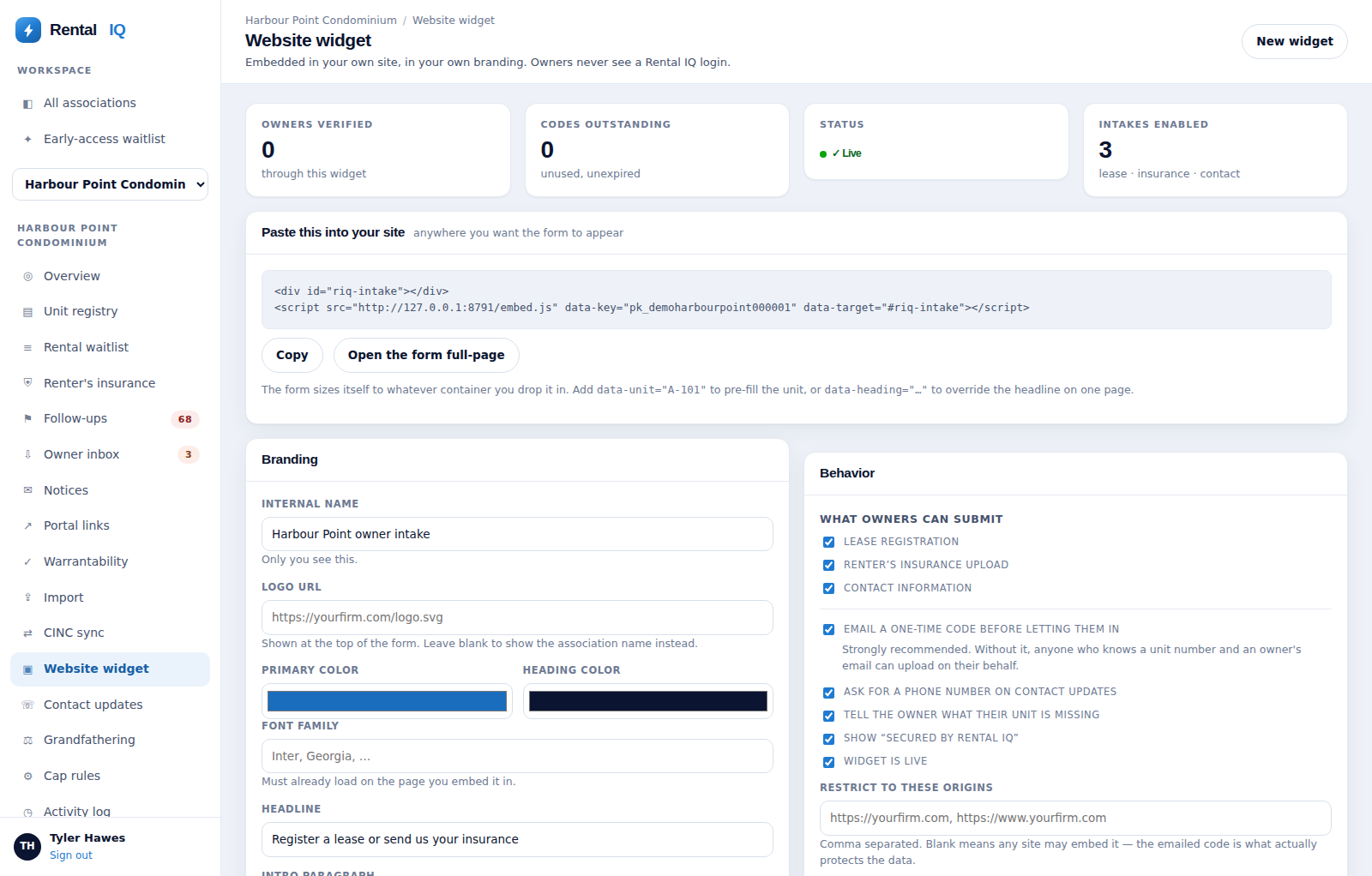
Two lines of HTML put a branded intake form on your own website — your logo, your colours, your copy. An owner identifies themselves with the unit and the email address the association already has on file, proves it with a one-time emailed code, and uploads the lease.
Rental IQ reads the PDF and proposes every field with a confidence score. A manager confirms before anything reaches the registry. If a manager has to hand-key every lease, the system stays empty — so they do not.
Rental IQ keeps the system of record and writes the answers back as rollup fields on the association and the unit — rental percentage, cap status, slots available, packet status, next expiration. Managers see them where they already work, and nobody learns a second daily tool.
We are working with a small number of design-partner firms before general release. Join the list and we will reach out when early access opens.